

American Lawn Mower Company faced a go-to-market problem that felt invisible until it wasn’t.
Products were technically “launching” on Amazon, but only with a few images and minimal content. Fully optimized listings with videos, A+ content, and search-ready visuals took up to eight months to complete. Teams worked in silos. Engineering owned product data. Overseas manufacturers owned production. e-commerce waited for everyone to complete their jobs. Creative reacted late. No one on the creative and makreting owend the full system.
The result was predictable: delayed momentum, underperforming listings, and missed revenue during the most critical launch window.
Alec stepped in as the guide to untangle the chaos and redesign the process from the ground up.
Alec started by diagnosing the real bottleneck. The problem was not talent or effort. It was timing, ownership, and flow.
He mapped the entire product lifecycle from engineering to Amazon launch, identifying where information stalled and where teams lost months waiting on physical samples. Instead of accepting the traditional sequence, he challenged it.
His solution was simple in concept, but transformative in execution: shift critical creative and e-commerce work earlier in the lifecycle by replacing dependency on physical products with realistic 3D renders and structured workflows.
He introduced a centralized project management system that connected engineering, e-commerce, overseas manufacturing partners, and his internal creative team. Every asset had an owner. Every step had a timeline. No work started without clarity.
Then came the breakthrough.
Alec negotiated directly with China-based manufacturers to obtain raw 3D CAD and render files before production. These files allowed his team to create fully built.
Amazon listings months ahead of physical inventory.

1. Reordering the GTM timeline
Instead of waiting for samples, Alec enabled creative, video, and A+ content to be produced upfront. Listings launched with ten images, videos, and optimized descriptions on day one.
2. Creating a scalable asset system
He created a system for his team to reorganize more than eighty thousand images into a clear, searchable file structure. Teams could finally find what they needed without starting over.
3. Designing for performance, not aesthetics
Every image and video was built with Amazon search behavior in mind. The listings were not just complete. They were competitive.
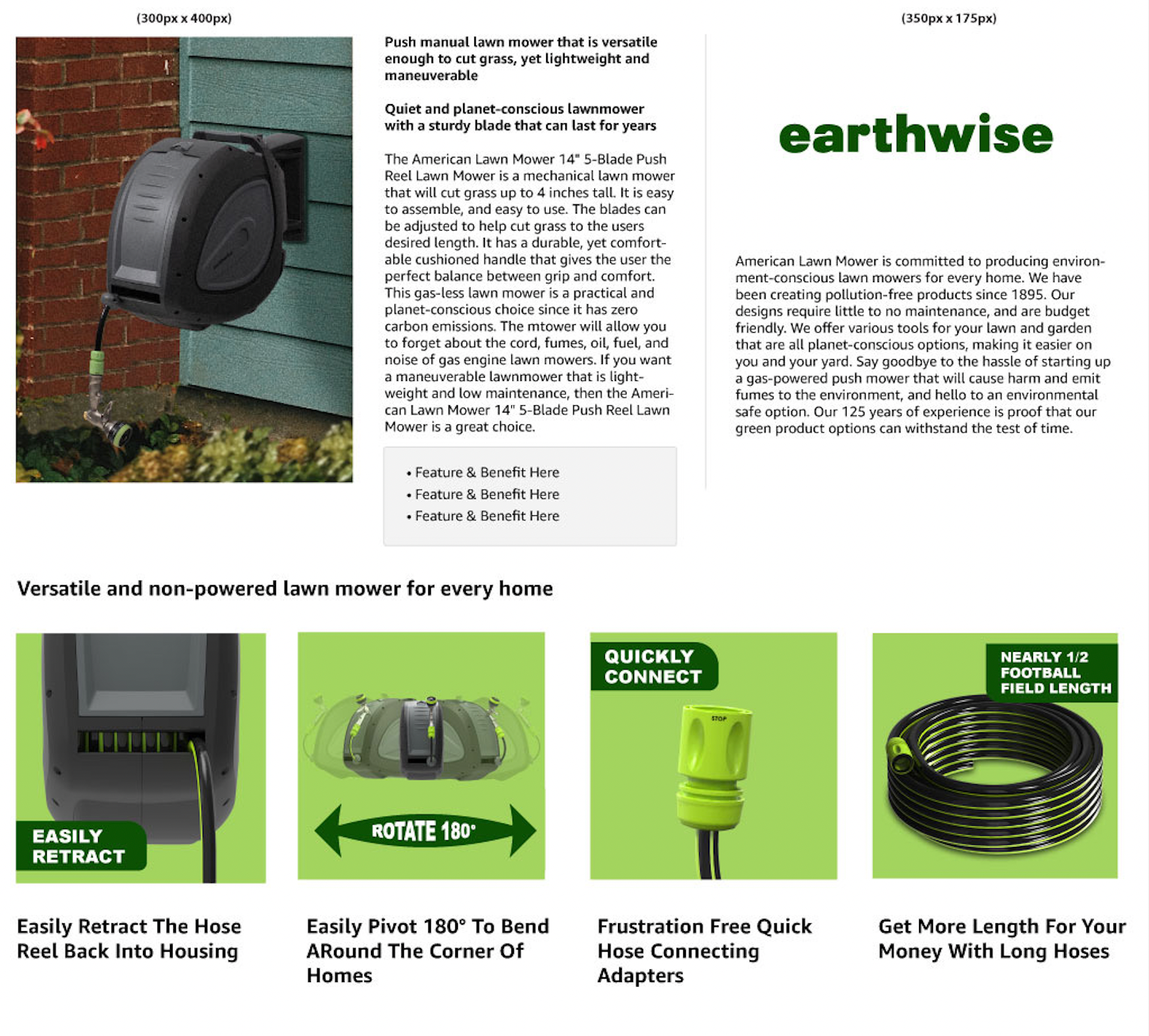
The new process reduced go-to-market timelines by up to eight months. The listings were ready before the products even hit port to be warehoused at Amazon.
Products launched fully optimized instead of partially complete. Amazon search visibility improved by as much as 45% on key listings. Internal teams moved faster with less friction. Leadership gained confidence that launches were no longer dependent on last-minute heroics.
Most importantly, the marketing and creative team stopped treating Amazon as a downstream task and started treating it as a strategic growth channel.
Alec carried three principles forward from the experience.
Principle One
Fix the system, not the symptoms. Speed comes from structure, not urgency.
Principle Two
Move work upstream. The earlier teams collaborate set their desks next to eachother (hypothetically), the more time you create without adding cost.
Principle Three
Design processes around outcomes. A beautiful listing means nothing if it launches too late to matter.

© Made by Alec Witham

